


Highlights
Global uncertainty creates quiet, collective tension
Motivation fails when you need it most
The Continuity Floor protects the mission with a structural minimum
The Friction-Sustain Protocol keeps operations running when the world feels heavy
Motivation is fair-weather. Structure is lifelong
👋 Hi, it’s Luisa Javier. Welcome to Aziul Connections ( 🌎🔬The Sustainable Systems Lab), where I study how sustainable systems are built for business, leadership, and life.
Subscribe to watch what happens when you study systems instead of chasing motivation. In Aziul Connections you will find real experiments from someone building between two continents during uncertain times.
🎧 Listen to Luisa read this article
As a Mexican doing business and residing in Saudi Arabia, February 2026 was a challenging month. One of the most wanted cartel chiefs was executed, sparking violence across my country. In that same period, war broke out between Iran, Israel, and the USA.
To be honest, I felt quite down the past couple of weeks. I thought I was alone in this feeling. But then I had four separate conversations with friends and colleagues here in Saudi Arabia. None were about the same topic, yet all carried the same weight. That quiet hum of uncertainty.
If you live in the Middle East right now, you probably know the feeling. Not panic. Not even fear. Just the subtle weight of not knowing what comes next.
Periods of uncertainty reveal something most of us forget during stable times: motivation is unreliable. When life becomes heavy — geopolitics, personal crises, business pressure — the ability to keep moving rarely comes from inspiration. It comes from structure.
In this article I want to share one of the most important systems I have learned through experience:
How to build routines that continue working even when you do not feel capable of maintaining them.
The Environmental Variables: Saudi Arabia’s Quiet Tension
As a reminder, I am building the Sustainable Systems Lab. Through the Experimental section, I document the experiments I use to test the systems I put in place to keep working.
This is the first variable of my experiment: Environmental Friction. It is what happens when external pressure meets limited internal capacity. Psychologists call this “collective angst“ — the worry a group feels about its future when conditions become threatening, spreading through proximity and shared identity.
The climate psychologist Britt Wray writes in her Substack that collective anxiety often spreads long before people consciously recognize it. Entire communities can carry a low level tension without anyone explicitly naming it.
You still have responsibilities. You still have a company to run, a child to raise, people depending on you. But your emotional bandwidth shrinks. Your attention fragments. Your body wants to stop even when your calendar says otherwise.
As a founder-operator, I am treating myself as the primary sensor in this environment to answer one question:
When the collective energy drops, where does the individual find the floor?
The Hypothesis: Systems vs. Motivation
In my Sustainable Systems Lab, I define a system as a structure that lets something keep functioning without you having to hold it together by hand.
My Hypothesis: Motivation is an unreliable variable that fails exactly when it is most needed. A sustainable system, however, acts as a floor that carries continuity when emotions fluctuate.
In this experiment, I am testing whether a system built in calm times can carry an operator through friction times without consuming the person running it.
The Architecture of Resilience
Here is the simplest way I know to explain how a sustainable system holds you up when you cannot hold yourself together.
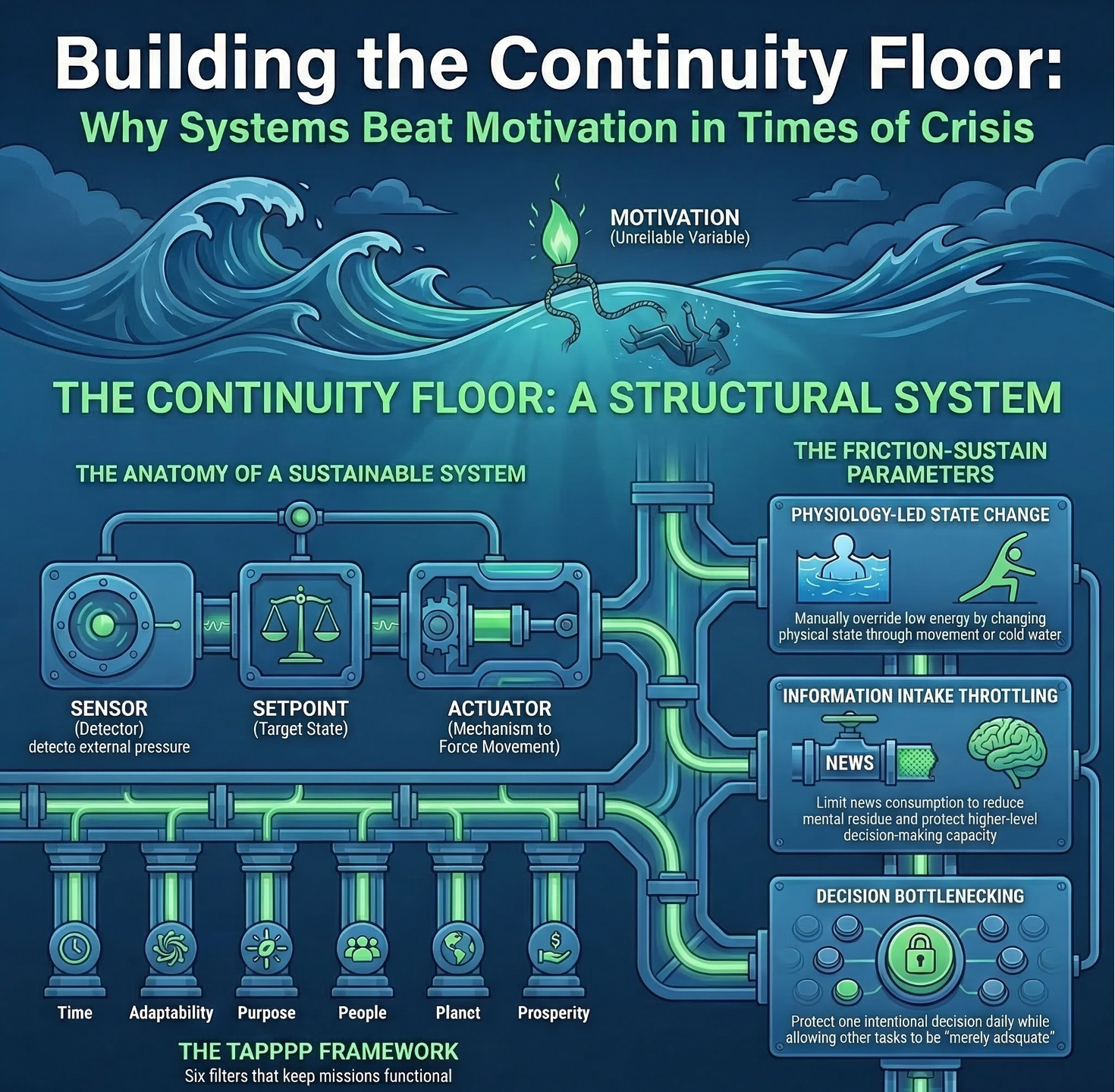
Every functional system (whether a thermostat, a supply chain, or a founder’s daily routine) needs three things:
The Sensor: Something that detects when conditions change
The Setpoint: A target state it is trying to return to
The Actuator: A mechanism that forces movement back toward that target.
When motivation fails, our internal detector gets overwhelmed. We feel the weight but lose the capacity to respond to it. The system stalls.
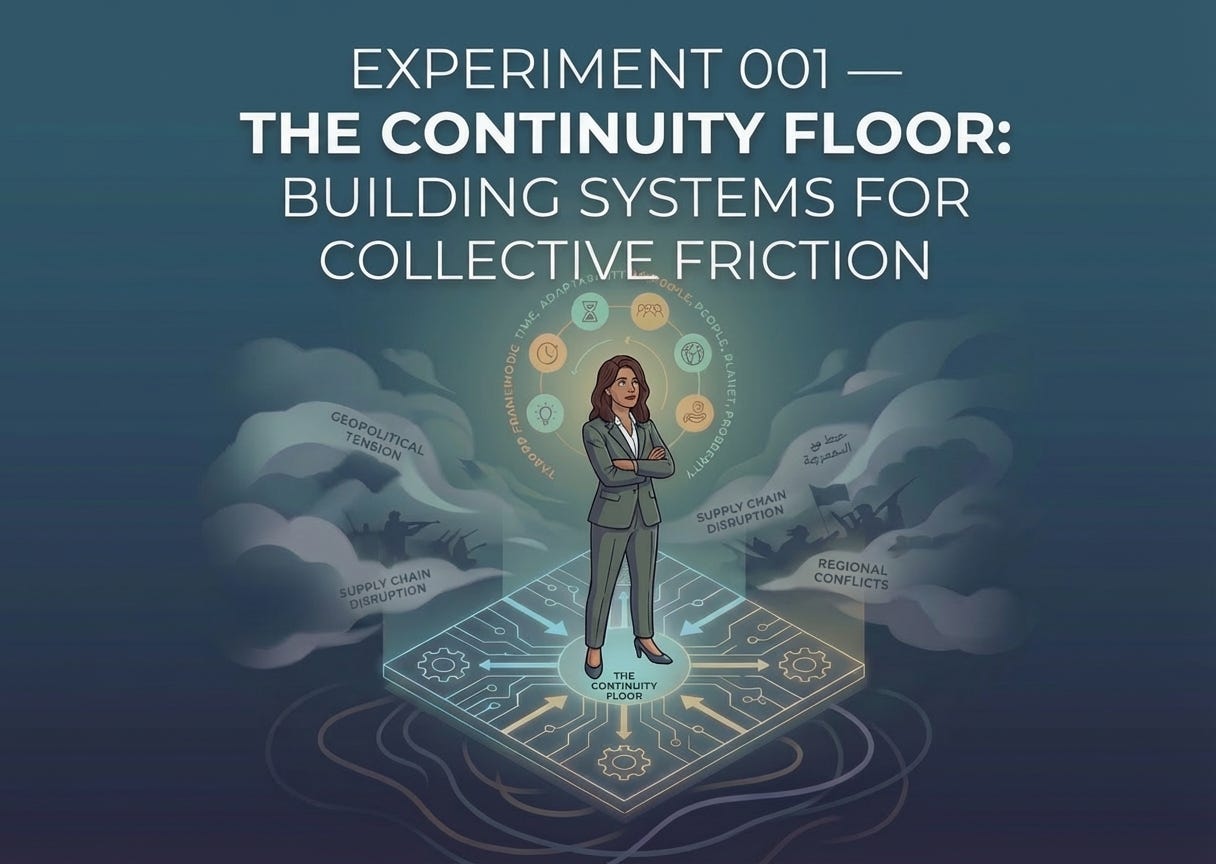
To prevent that stall, I built the TAPPPP framework as what I call the Continuity Floor. It is not a productivity tool. It is a structural minimum. Six filters that keep the mission functional even when the person running it is depleted.
The six filters are Time, Adaptability, Purpose, People, Planet, and Prosperity.
Time is about building routines that run without you having to decide to do them each morning.
Adaptability is designing structures that bend under pressure instead of breaking.
Purpose is the clarity filter that closes the mental open loops and tells you where to point your attention.
People is the recognition that you do not carry weight alone.
Planet and Prosperity ensure the system is grounded in something that generates enough value to keep going without exhausting the person running it.
What matters in a friction period is not mastering all six. It is knowing which filter is the one keeping you functional right now.
The Stress Test: Evidence of a Parallel Structure
To validate the hypothesis that systems override motivation, I look at two distinct experiments from my own life: a personal systemic failure in 2017 and an organizational pivot under extreme environmental friction in 2020.
Experiment A: The 2017 Personal System Failure
In 2017, the environmental friction in my life reached its peak through a total systemic collapse: a coma and a divorce within months. At this point, my personal routines — exercise, prayer, rest — failed almost overnight because they were willpower-dependent. They lacked a structural floor and relied on adrenaline, which is a finite fuel source.
But a parallel structure was running at the same time: my Ph.D. and the early vision for WAYAKIT.
I had zero motivation to finish my doctorate, yet the professional system held. The lab protocols and academic milestones forced movement even when the operator was paralyzed.
To keep this structure from burning out, I practiced the Sunset Protocol. Every evening, I went to the beach to watch the sun go down. This was a Purpose recalibration. It allowed me to close the open loops of my grief and reconnect with the why of my work, acting as a filter for the next day’s decisions.
Experiment B: The 2020 Organizational Pivot (The Weight of Purpose)
The second experiment occurred when COVID-19 introduced a global environmental friction. At WAYAKIT, we had just raised funds for a travel-based laundry spray at the exact moment the world stopped traveling.
I felt like a failure. We had designed something that was suddenly obsolete. At the same time, the friction was not just professional, it was deeply personal. While working 16 to 18 hour days during Ramadan, fasting and exhausted, I received news that my family members in Mexico were passing away. The uncertainty of when I would see them again created a crushing weight.
On the days when grief and anger dominated, I stopped aiming for total productivity. I protected one intentional decision: redirecting our technology.
My motivation did not come from a growth mindset. It came from purpose. My anger at the loss of my family transformed into a mission. If our technology could provide the fastest, safest disinfectant to the market, it had to be done. Purpose became the mechanism that moved the mission forward while everything else was merely adequate.
In both cases, Adaptability allowed the system to bend — from a gym to a hospital corridor, from a laundry spray to an aviation disinfectant — without breaking.
We build the Continuity Floor on good days specifically because we know that on the hard days, motivation will fail us, but the structure will remain.
The Experimental Protocol: The “Friction-Sustain” Parameters
I am currently testing three operational parameters to maintain functionality during high-friction periods. Note: these are tailored to my internal capacity and are not a universal prescription.
Parameter 01: Physiology-Led State Change (Manual Override)
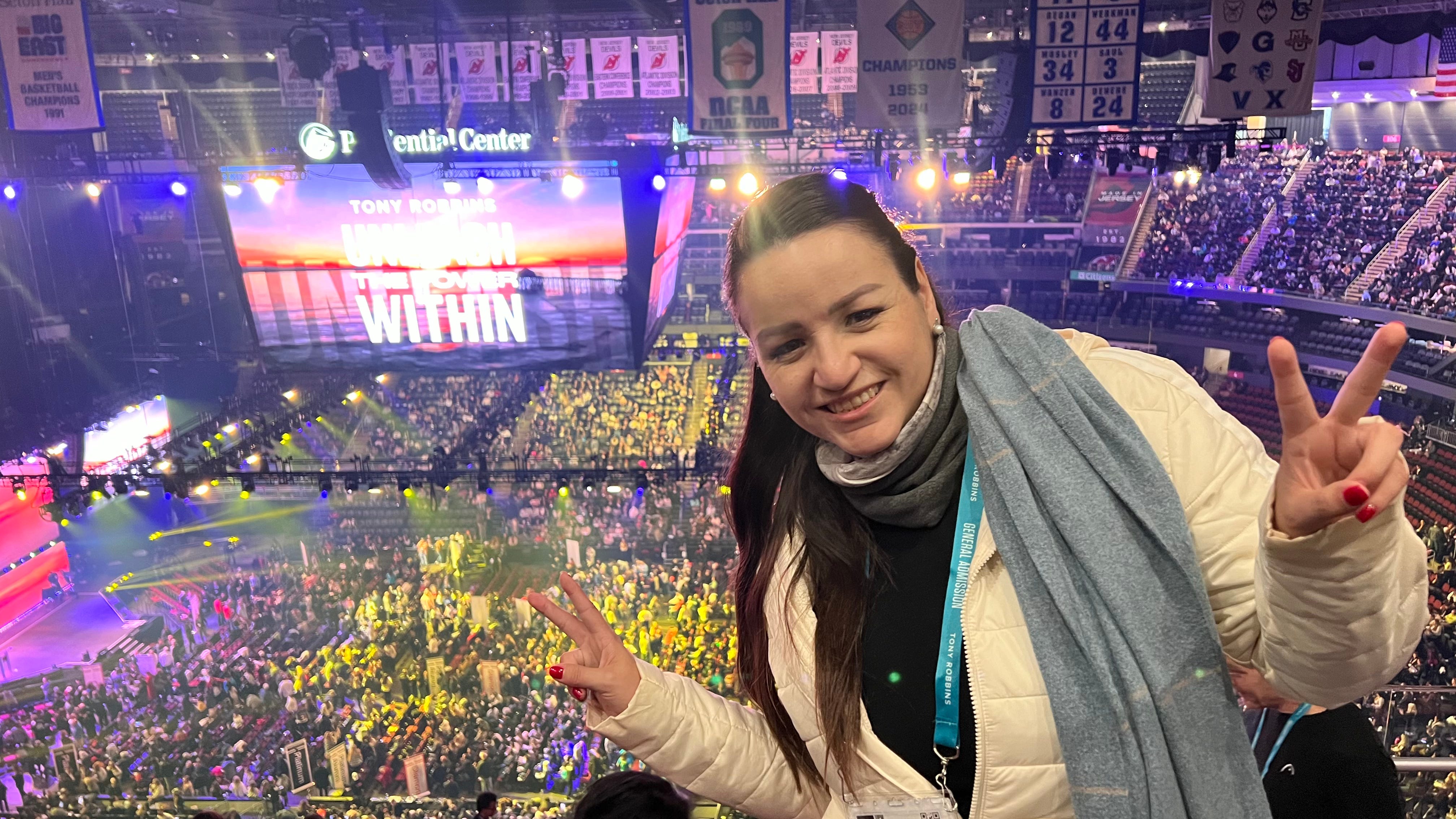
In late 2024, I traveled to New York to attend Tony Robbins’ Unleash the Power Within. I went out of curiosity, but one principle stayed with me: state management.
Robbins’ argument is that you should change your physiology first, and your focus will follow. When the world feels heavy and my internal signals are telling me to stop, I do not try to think my way into a better mood. I move my body — a walk, cold water, stretching.
Behavioral science supports this: repeated physical actions create automatic responses that stop requiring negotiation. By changing the physical state, I manually reset the sensor, allowing my attention to shift and my decisions to change.
Parameter 02: Information Intake Throttling
I am testing a strict limit on news consumption to specific times of day. The writer Catherine Price describes “doomscrolling” as a signal of an overloaded nervous system seeking resolution in a place that cannot provide it. By throttling this intake, I reduce the mental residue left on higher-level decisions.
Parameter 03: Decision Bottlenecking
On heavy days, when friction shrinks my emotional bandwidth, I stop aiming for total productivity. I deliberately allow most of my tasks to be merely adequate so that I can protect one intentional decision that moves the mission forward.
I implemented this parameter when news of the war broke in February 2026. My one intentional decision, my actuator, was the choice to return to **Aziul Connections.**
This was more than just returning to a neglected project. It was a Purpose recalibration. By bottlenecking my focus into this single point of action, I closed the open loops created by the global friction and re-established my clarity filter. This trigger did not just move a task forward. It re-anchored my Continuity Floor, providing the structural confidence required to function when the environment felt entirely unclear.
Analysis: The Quiet Work of Continuity
The preliminary results of this experiment suggest that these systems do not fix the world or resolve geopolitical tension. They simply keep the operator functional. When the collective energy drops, a sustainable system ensures that the Continuity Floor remains high enough that you do not fall into the paralysis I experienced in 2017.
We build these systems on good days specifically because we know that on the hard days, motivation will fail us.
Motivation is a fair-weather friend. Structure is a lifelong partner.
Coda: The Blue Floor
I chose the name Aziul for my lab because it is “Azul” — the deep, stable blue of our planet, combined with my own name, Luisa, reversed. It represents the stability I am trying to build: a structure that holds your weight when the world feels heavy.
In February 2026, the world felt heavy. But because of the Friction-Sustain parameters, the mission did not stop. I did not need to feel inspired to move forward. I just needed to trust the structure.
The goal of the Sustainable Systems Lab is to ensure that your floor is never again dependent on how you feel when you wake up.
The question I want to leave with you:
What is the one structure you are building right now that will hold your weight when the atmosphere shifts? Reply to this article. I read every response.
Subscribe to Aziul Connections (The Sustainable Systems Lab)
Public lab studying sustainable systems across business, leadership, and life. Essays, experiments, field observations and case studies from a climate-tech founder (Dr. Luisa Javier) operating between LATAM and MENA. Aziul = Azul (the planet) + Luisa (backwards)
About the author - Dr. Luisa Javier
Dr. Luisa Javier is a scientist and climate-tech entrepreneur across LATAM & MENA, focused on designing sustainable systems for business and society. She is the Founder and CEO of WAYAKIT Group and the author of **Aziul Connections.**
Aziul Connections is the public lab where I study how sustainable systems are built.
“I build sustainable living through WAYAKIT, and study the systems behind it through Aziul Connections.”
Thank you for reading or listening to this article, let’s keep building our Continuity floor, one system at a time!
Luisa
Connect with me
LinkedIn: https://www.linkedin.com/in/luisajavier/
Instagram: https://www.instagram.com/luisa.emi
Snapchat: https://www.snapchat.com/@luisaemijavier